Likoma Island: The Most Surprising Address in Africa (and Why Kaya Mawa Holds the Key)
Green Safaris | July 31, 2026
Cross the Lake That Feels Like the Sea
Some journeys begin with a boarding pass. This one begins with a light and delighted shrug, because Kaya Mawa, the lodge waiting for you at the end of it, takes its name from a Chichewa phrase meaning “maybe tomorrow,” and nothing about the road here rewards a rigid itinerary.
You leave Zambia’s red dust and generator hum behind, and somewhere above the glittering sprawl of Lake Malawi, the bush gives way to something altogether stranger: horizon in every direction, gulls wheeling over low swells, the distinct sensation of having left the continent without ever actually leaving it. At over 560 kilometres long and plunging to depths that could swallow a cathedral spire without a ripple, Lake Malawi has fooled better navigators than you into reaching for the word “sea.”
Then, exactly where the map insists you should be looking at Mozambique, something delightfully wrong happens. An island appears, flying the wrong flag entirely.
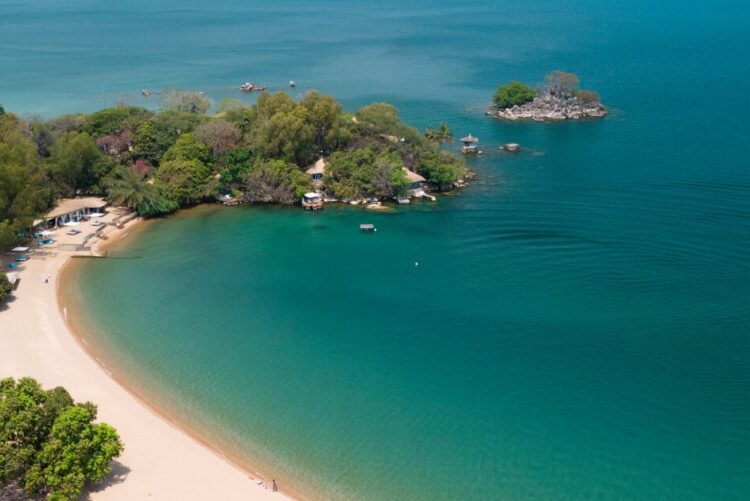
Welcome to Likoma, Malawian by passport, marooned in Mozambican waters by geography, and answerable to neither when it comes to the pace of island life. Baobabs lean over sandy lanes, bicycle bells double as traffic signals, and the lake laps at granite boulders with the patience of something that has nowhere else to be. It is, without much competition, the most surprising address in Africa. And tucked into its prettiest bay sits the reason you’ve come all this way: Kaya Mawa.
Where Is Kaya Mawa and What Does the Name Mean?
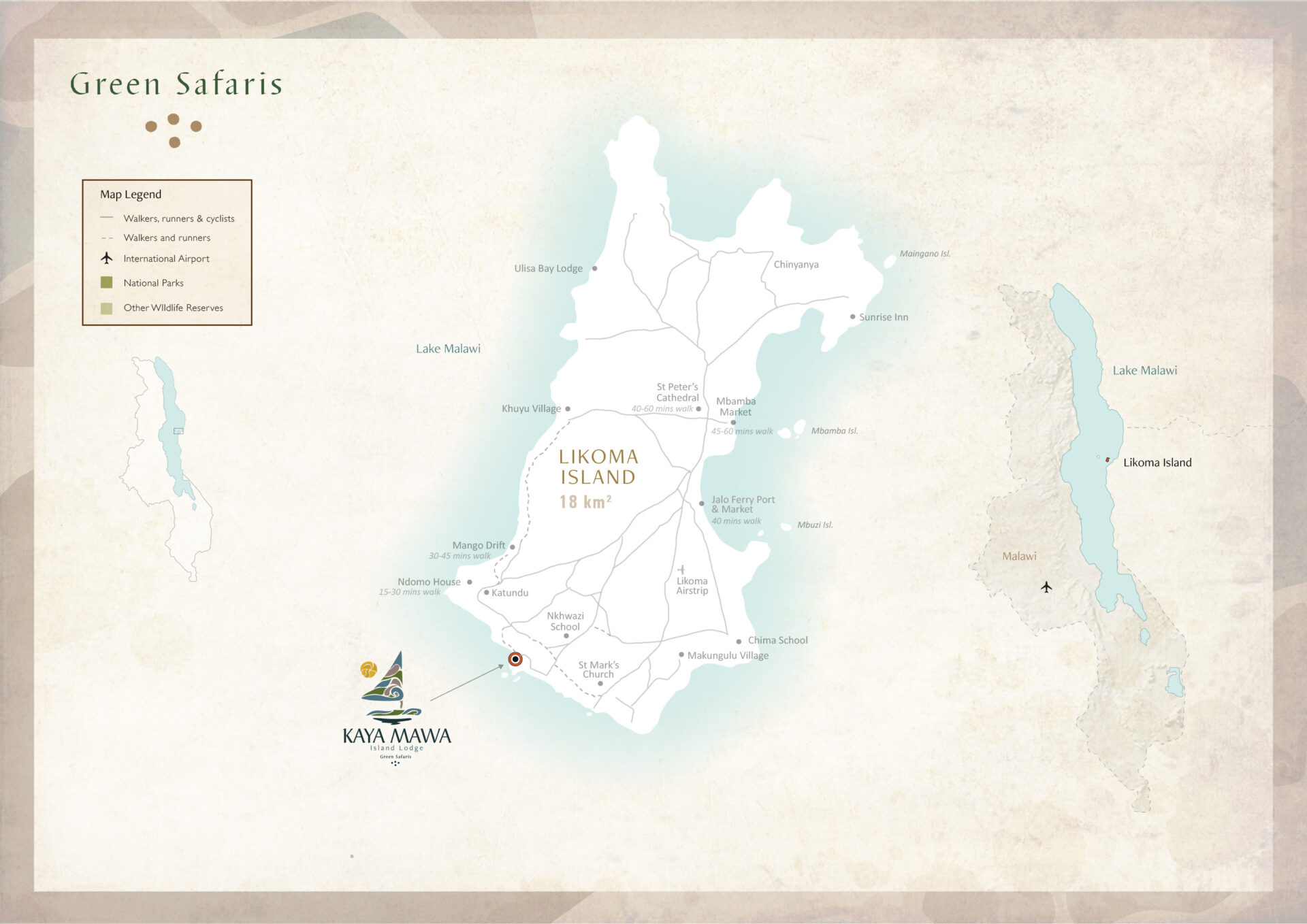
The short answer, for anyone skimming this with one eye on a ferry timetable: Kaya Mawa sits on the southwestern shore of Likoma Island, a speck of Malawian territory adrift in the Mozambican half of Lake Malawi, reached by a short light-aircraft hop from Lilongwe or a slower, saltier crossing by fast ferry from the mainland.
The name itself translates from Chichewa as “maybe tomorrow”, an entire philosophy of island time folded into two words. Dinner might drift an hour late because the stars demanded a longer look; plans here are gentle suggestions rather than commitments. Wander the lodge’s smooth granite frontage for long enough, though, and you will notice nobody here consults a watch: the lake decides the pace, not the clock. Maybe tomorrow, then. And really, why rush a view like this?
Likoma Island: A Geographical Curiosity
Likoma’s peculiar citizenship is no accident of cartography. Anglican missionaries planted their flag here in the 1880s, well before modern borders were drawn across the lake, and when the lines were finally inked in, Likoma (along with its smaller neighbour, Chizumulu) stayed stubbornly Malawian, an island exclave surrounded by Mozambican water.
St Peter’s Cathedral is a soaring slice of English Gothic revival that took around eight years to build by hand and has held services continuously since 1905, making it one of the largest cathedrals in Central Africa.
. Stand beneath its stone vault, quarried and carried here without the benefit of modern machinery, and the island’s whole improbable story clicks into focus, a rock this remote, tethered instead to something far larger than its size would suggest.
Beyond the cathedral, Likoma unspools into mango orchards, rocky headlands and a dozen fishing villages where children skim stones with the unhurried confidence of people who have never once needed to check a watch. Around 15,000 people call the island home, most dependent on the lake’s fish stocks and, increasingly, on the tourism, healthcare and training that lodges like Kaya Mawa help fund.

Kaya Mawa: Where Luxury Learns From the Landscape
Five houses and five rooms, no two alike, are tucked into the bay’s boulders rather than bulldozed over them, a design instinct that makes Kaya Mawa feel less like a hotel and more like something the island grew on its own. Whitewashed walls and exposed stone interiors open straight onto lake and sand; a handful of suites even keep a private plunge pool or courtyard tucked between the rocks.
It is also Malawi’s first resort powered entirely by renewable energy, and that same ethic runs through the décor. Local artisans handcraft statement furniture and interior pieces throughout the lodge, many of them women, at the on-site Katundu Workshop, which turns the lodge’s own offcuts and discarded materials into upcycled, sellable design. Nothing here is shipped in and forgotten; it is made by hands that live twenty minutes down the beach.

That same instinct for turning proximity into purpose runs through Kaya Mawa’s wider footprint on Likoma. Lodge revenue helps fund the Likoma Conservation Foundation, which has renovated the pharmacy and built new patient shelter at St Peter’s Hospital, a facility serving around 15,000 islanders, plus a steady flow of patients arriving from Mozambique and Tanzania, for whom the alternative is a ten-hour boat journey to the mainland. Elsewhere, a community garden run by five local women supplies fresh, chemical-free produce to both the lodge and surrounding villages, while the island-wide Likoma Reforestation project plants an ambitious 24,000 indigenous trees a year across a dozen village nurseries, quietly rebuilding soil that decades of firewood-cutting once wore thin.
Families gravitate here for reasons of their own: a freshwater playground sits fewer than twenty steps from most verandas, calm and shallow enough for confident splashing, with just enough current to keep things interesting. Couples, meanwhile, tend to claim the beachfront rooms, where the bed all but spills onto the sand and you can step out of your own front door straight into the lake. It is the sort of place that quietly rearranges what “five-star” is supposed to mean.

Stay at Kaya Mawa, in other words, and the bar bill does rather more than settle a tab.
Island Life on Lake Malawi
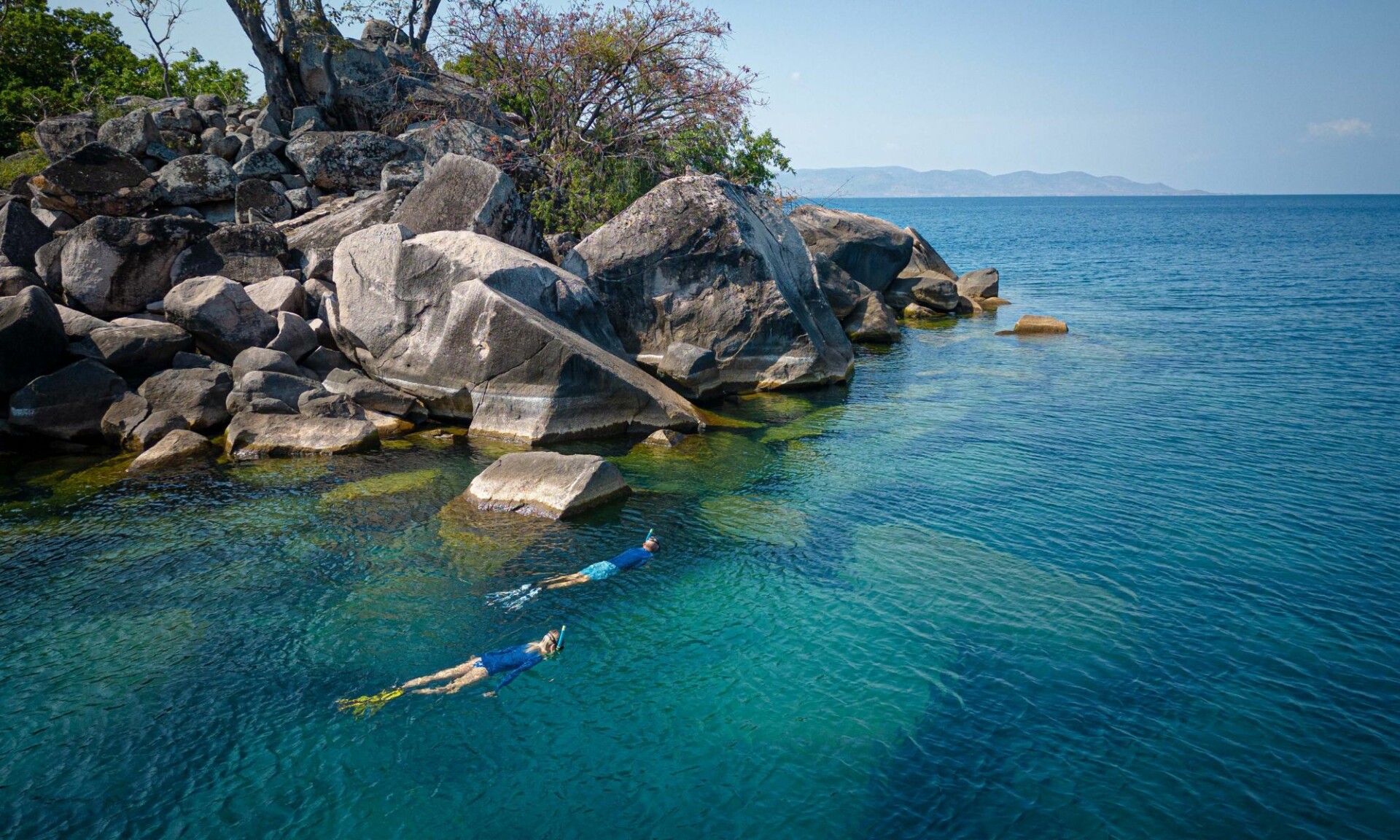
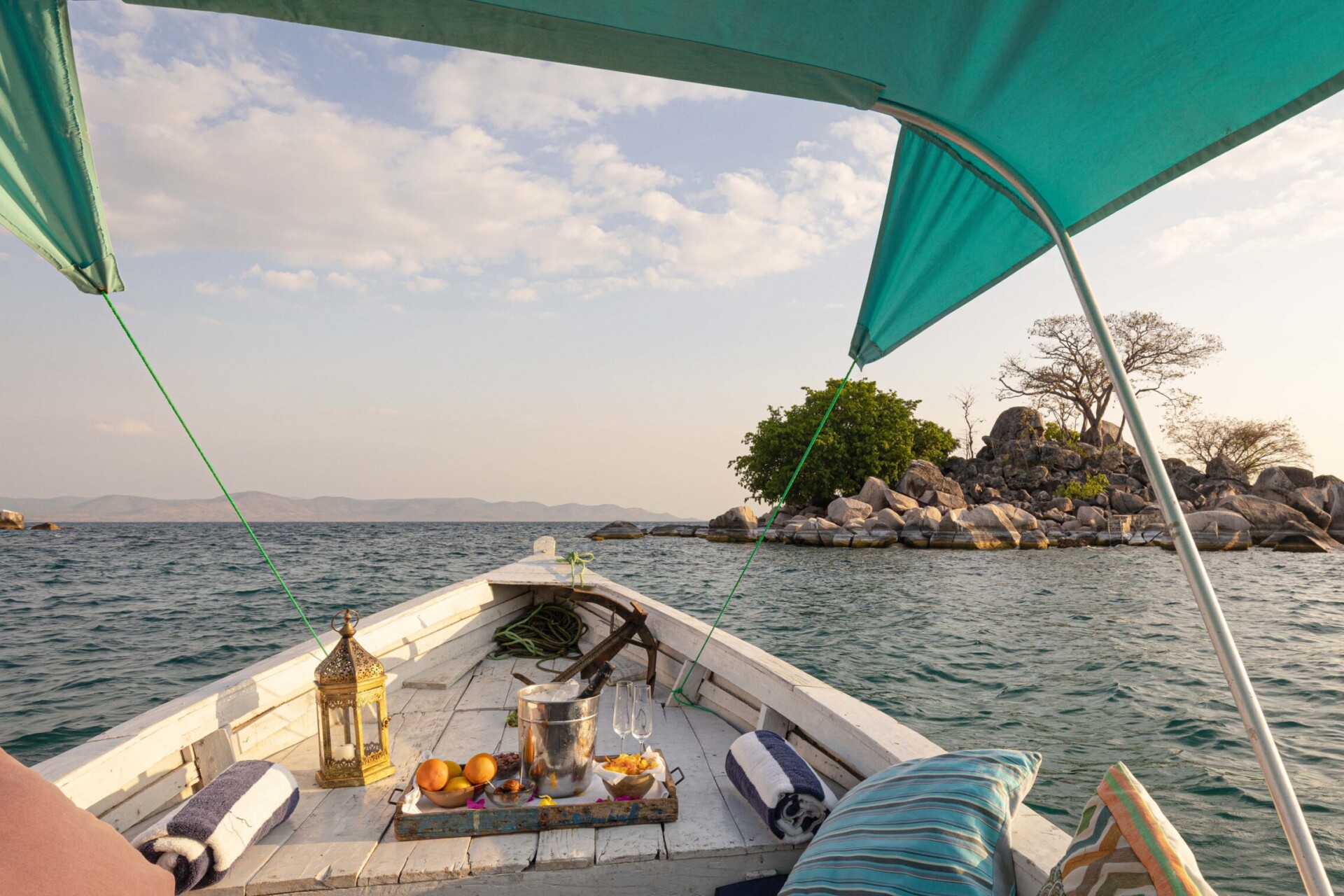
Days here move at the pace of the lake itself. Snorkel over Lake Malawi’s astonishing cichlid population, more than 700 species, many found nowhere else on Earth, flickering through the shallows in colours no self-respecting fish ought to be allowed to wear. Sail a dhow out past neighbouring islets, dive a rock garden in freshwater so forgivingly warm and clear that saltwater snobs quietly convert, or simply watch fisherfolk paddle home at dusk, lanterns bobbing, in a scene travel writers have been reaching for their notebooks over for decades.
That reputation precedes the island. Malawi’s own tourism board has singled out Likoma’s diving among the lake’s very best, The Telegraph has written Kaya Mawa up as a destination in its own right, and The Australian Financial Review once nominated it as strong competition for the ultimate lakeside escape. CN Traveler tucked Likoma into a shortlist of Africa’s most remarkable islands, Lonely Planet counts the wider lake among the country’s unmissable draws, and the Wall Street Journal, of all publications, made the long trip out for a diving holiday it deemed among the most relaxing anywhere on the planet. Reputation aside, the real draw remains stubbornly simple: clean water, warm welcome, nowhere else quite like it.
When to Visit
May through October brings Likoma’s dry season, cloudless skies, calm water and the best diving visibility of the year, particularly from June to September. The rains arrive between November and April, turning the island’s baobabs and mango trees a deeper, lusher green, though underwater visibility dips and afternoon storms roll in with theatrical flair. Honeymooners tend to favour the dry months; families chasing a quieter shoulder season sometimes prefer the hush of the green.
Most guests treat Kaya Mawa as one chapter of a longer African story rather than the whole book, pairing a few island days with a proper safari further south. Bookend the lake with the wilder rhythms of Ila Safari Lodge in Kafue National Park, or ease in gently at Tongabezi Lodge over the Zambezi at Victoria Falls, proof that a single itinerary can travel from thundering water to safari dust to the hush of an inland sea without losing a scrap of its magic along the way.
Find the Island for Yourself
For those of you following along delighted, here’s the clue of the week:
The trail has led you out of Zambia. Cross a lake so vast it feels like the sea. Find the island that sits in Mozambican waters but waves a Malawian flag. Its lodge name means ‘maybe tomorrow’. The cathedral on the hill will help you understand why. What is the island’s name?
An island in Mozambican waters flying a Malawian flag and guarded by a cathedral on the hill, Likoma rewards exactly the kind of traveller who enjoys a puzzle. Kaya Mawa is both the prize at the end of it and proof that a holiday can rebuild a hospital, replant a forest and still remember to serve dinner by starlight.
Maybe tomorrow, we always say. But there’s a strong case, dear reader, for booking today.
#GS10Trail #FollowTheTrail #ConsciouslyCurious