

Walking Safari vs Game Drive: Which Is Right for You?
Green Safaris | October 5, 2026
Two Ways to Meet the Bush
We’ll admit it: the first time many of our guests hear that you can walk through the African bush on purpose, on foot, with lions somewhere in the general vicinity, they assume we’re exaggerating for effect. Surely “safari” meant a vehicle, a pair of binoculars, and a sensible amount of metal between you and anything with teeth.
Turns out there are two entirely different ways to meet the bush, and neither is wrong. A game drive lets you cover ground and watch. A walking safari asks you to slow right down and feel it: the crunch of dry leaf litter, the sudden hush when a guide raises a hand, the realisation that you can smell an elephant before you see one. Both are legitimate, both are unforgettable, and choosing between them (or, better, combining them) is really a question of what kind of traveller you are. Here’s how we’d help you decide.
What Is a Walking Safari?
A walking safari is exactly what it sounds like: a guided game-viewing experience on foot, usually with a professional guide and an armed park ranger, moving slowly through the bush to track wildlife, read the signs it leaves behind, and get close to the smaller, stranger details a vehicle drives straight past: a dung beetle rolling its cargo home, the raised hairs on a guide’s arm as a buffalo’s scent hits the wind.
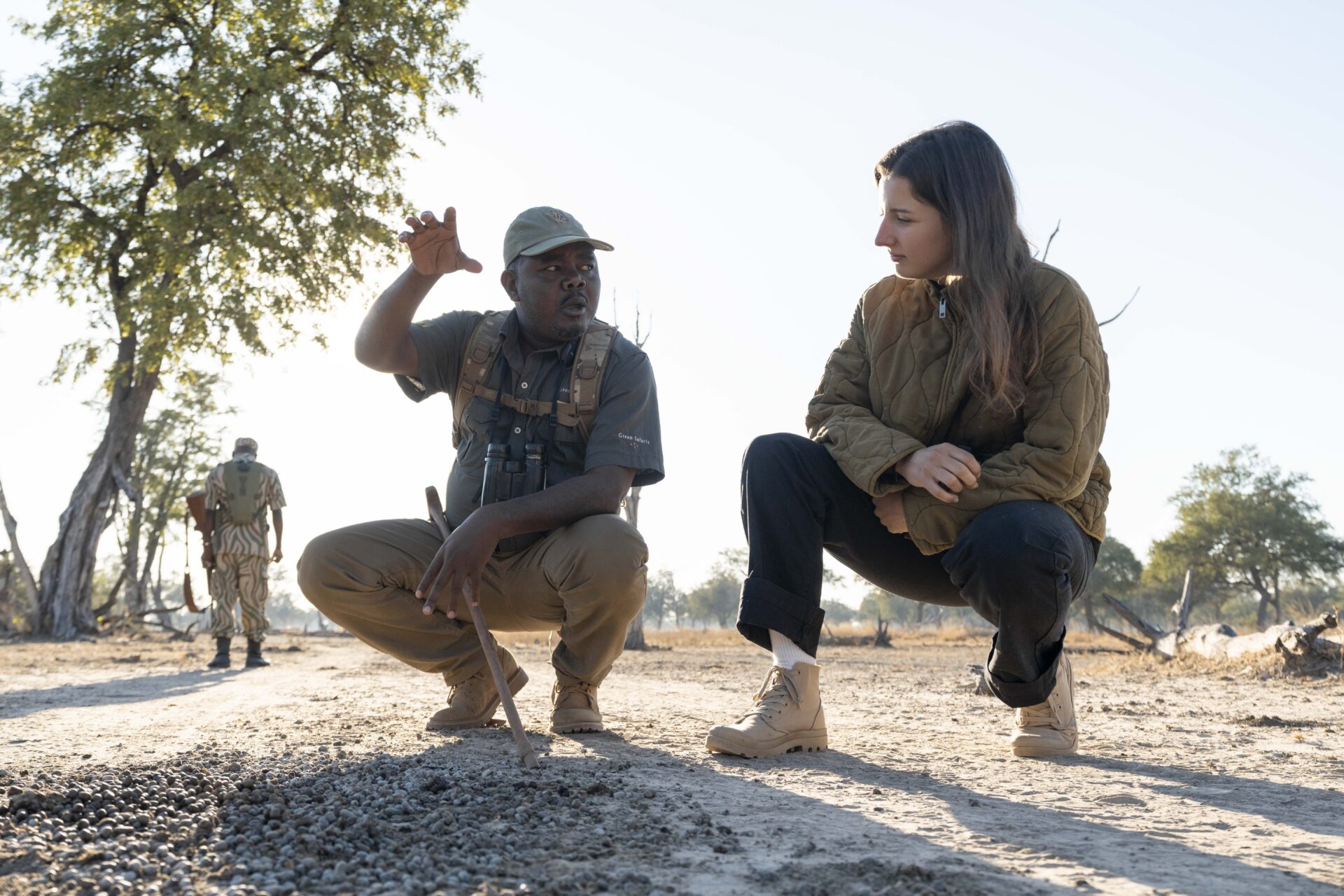
Before you venture off, there’s a briefing: how to stand still, how to read your guide’s hand signals, what to do if you meet something large and unbothered by your presence (short answer: nothing dramatic; you let the professionals do their job). It sounds intimidating when written down. In practice, it’s oddly calming because someone who has spent a career reading this exact landscape is walking half a pace ahead of you, and they are not, at any point, in a hurry.
Zambia isn’t just a place you can do this; it’s where the whole idea began. Modern photographic walking safaris were pioneered by Norman Carr in Zambia’s South Luangwa Valley in the 1950s, and the valley remains the spiritual home of the discipline. At Shawa Luangwa Camp, guests still set out at first light on foot with exactly that heritage behind every step.
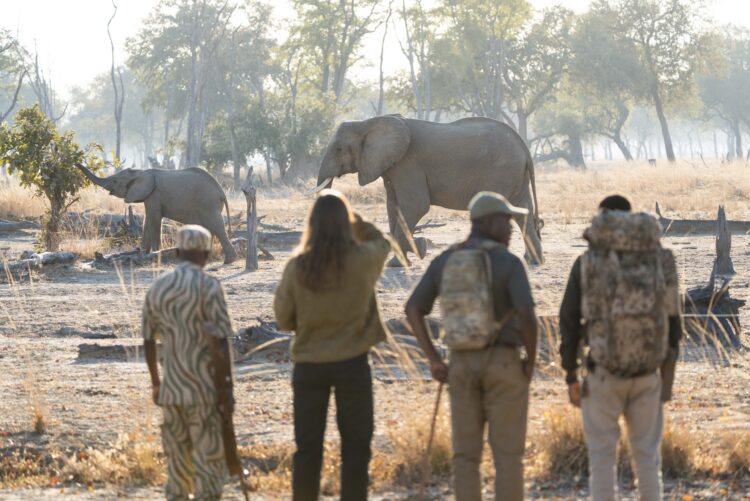
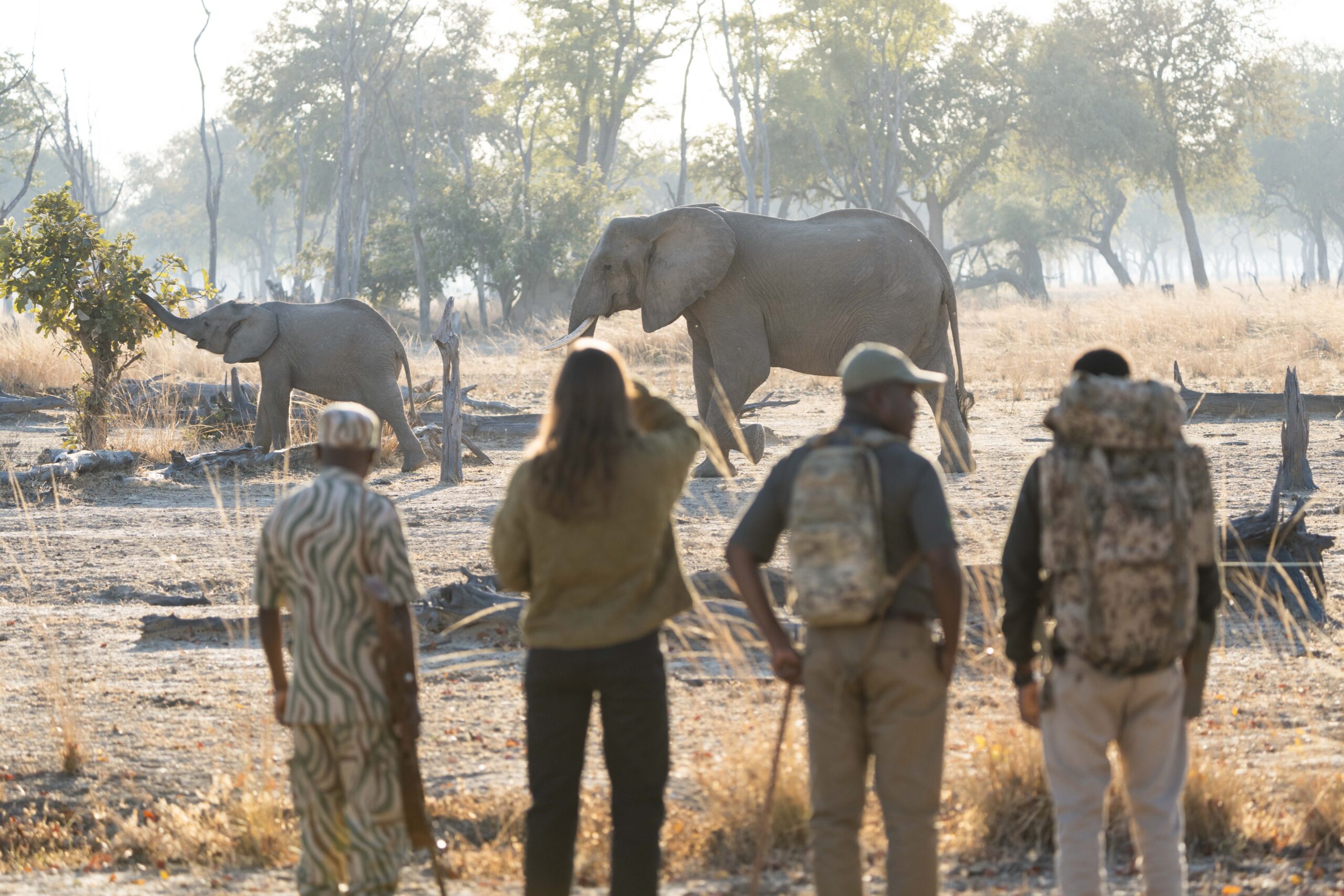
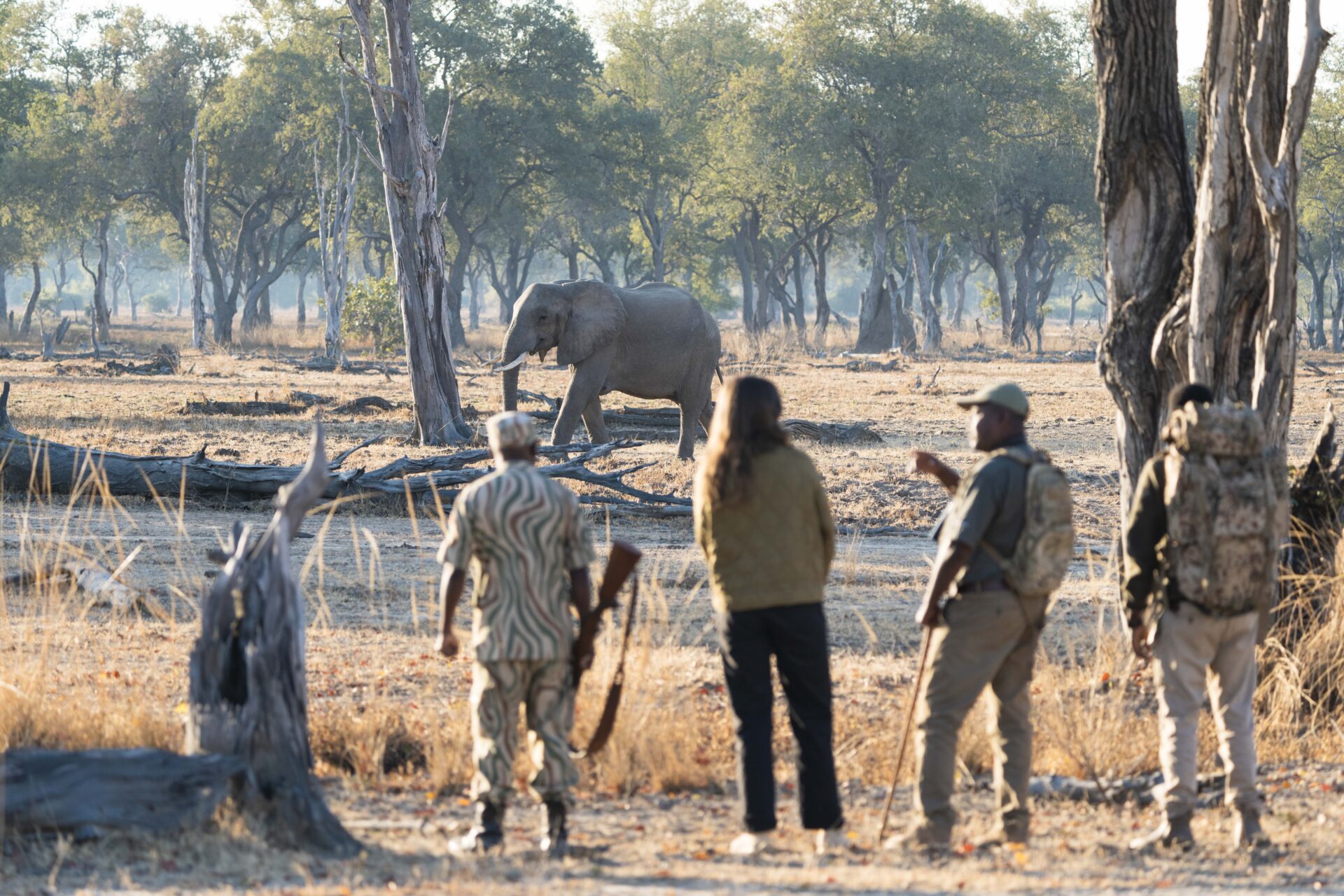
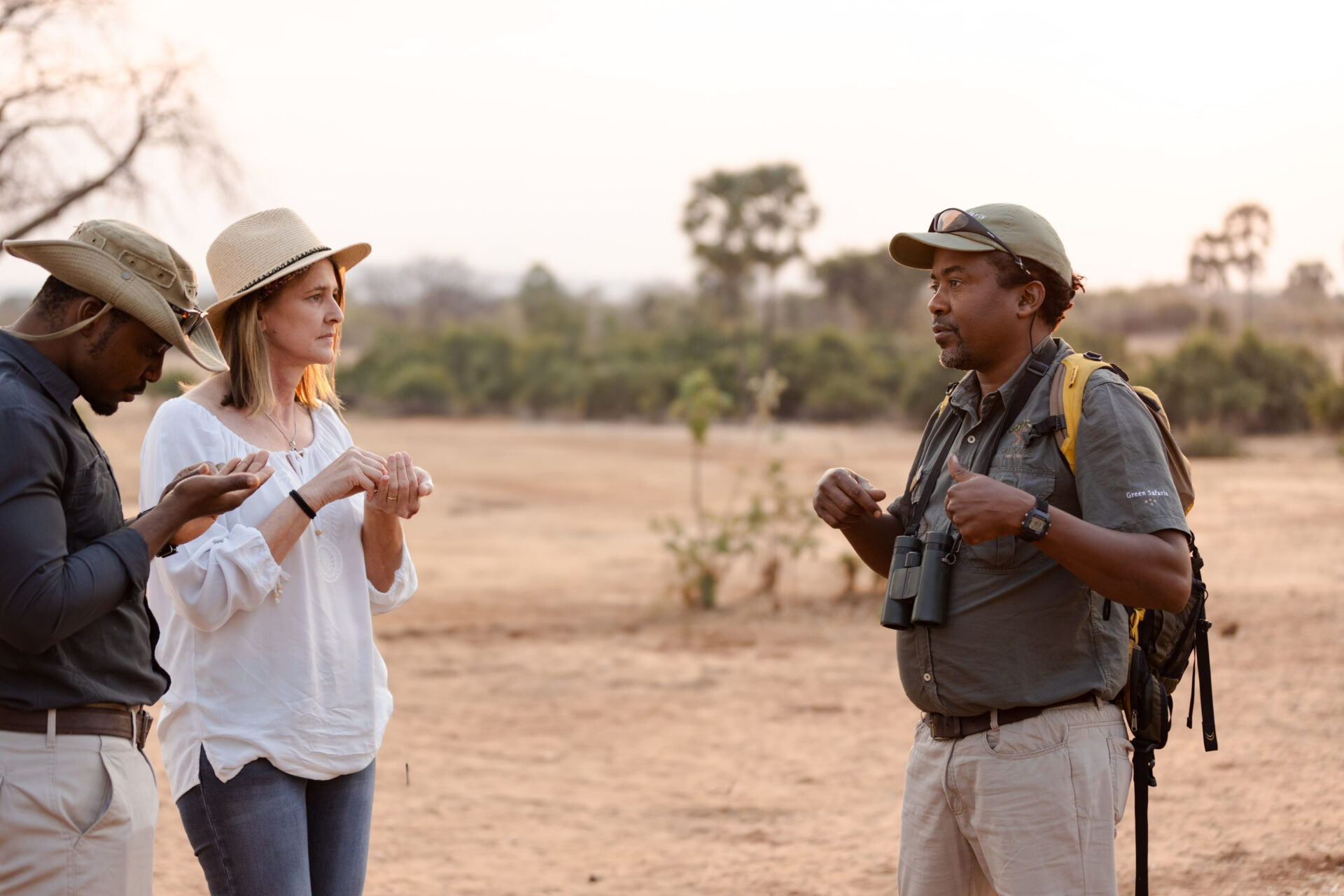
And this is where Zambia sets itself apart. In many safari destinations, a walk is about the little things: tracks, insects, birdlife. In Zambia, you are not only reading the small details; you are walking alongside big game, from elephant herds to grazing buffalo. That is only possible because of the guides. Guiding on foot here takes years of walks before a guide ever leads a guest into the bush, and years more of experience reading animal behaviour, interpreting calls and alarm signals, and tracking by sign and sound. When your guide raises a hand, it comes with all of that behind it.
What Is a Game Drive?
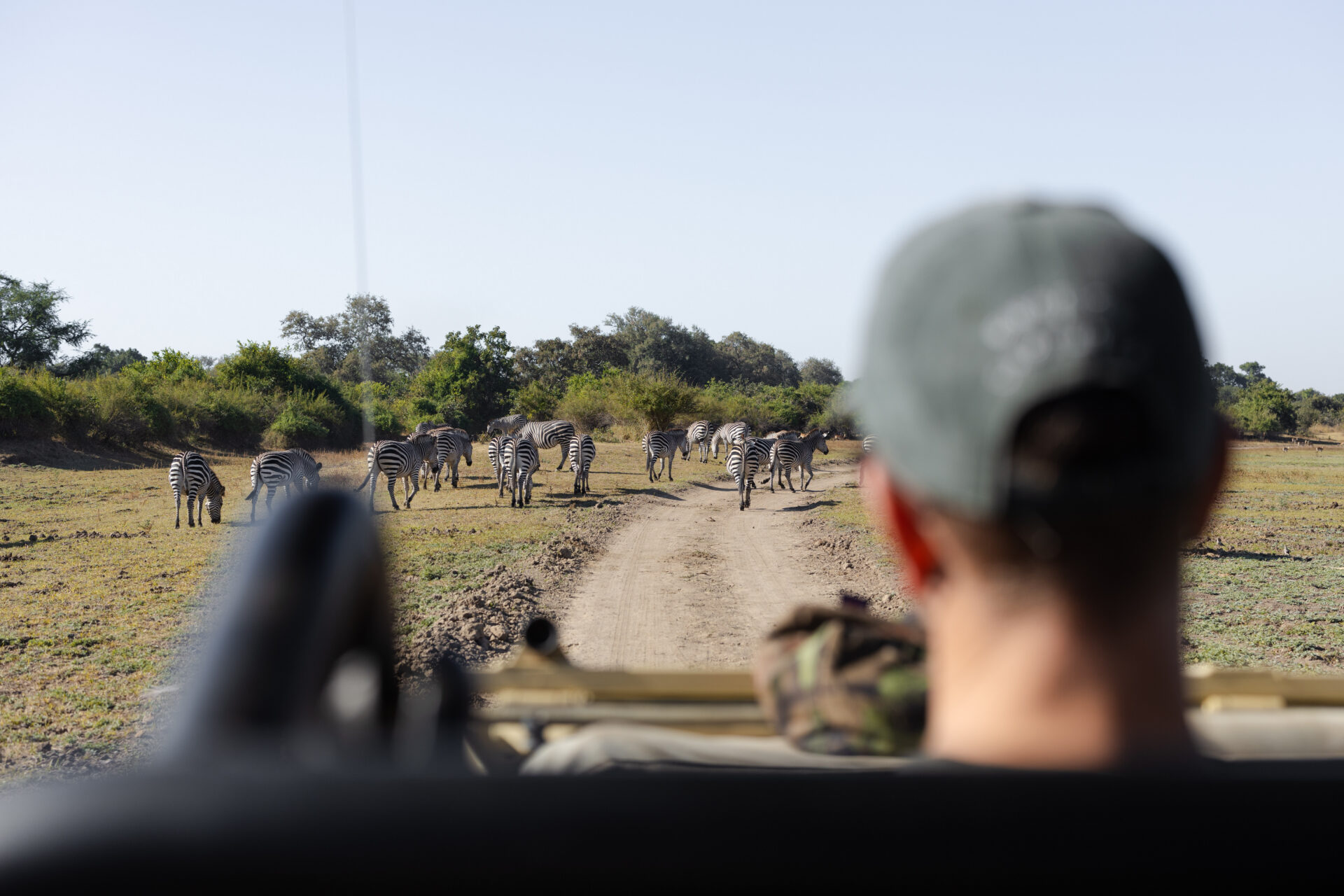
A game drive is the safari most people picture: an open 4×4, a knowledgeable guide, and a route that can chase a fresh set of leopard tracks or a distant column of dust for kilometres in a way no one on foot ever could. It’s the format that gets you to the sighting, wherever it happens to be, and it covers far more territory in a single outing than a walk ever will.
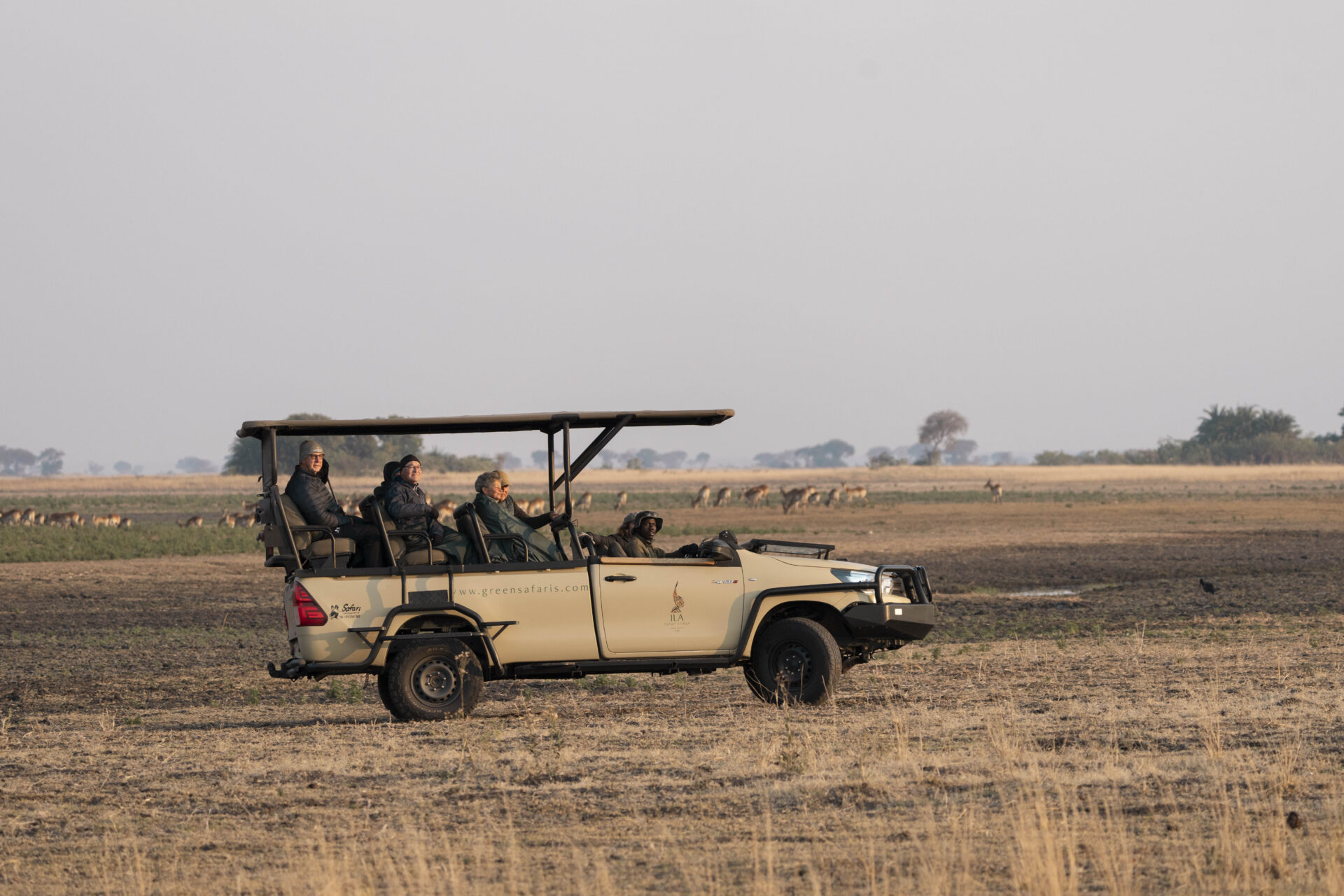
It’s also where Zambia has quietly rewritten the rules. Rather than the usual diesel growl, we run electric game drive vehicles at camps such as Shawa Luangwa and Chisa Busanga, a “Silent Safari” that lets you quietly approach a pride of lions without a single engine note announcing your arrival first. Whether at dawn or dusk, the vehicle also means you’re not limited by daylight or distance the way a walk is: spotlit night drives, like those at Sausage Tree Camp in the Lower Zambezi, open up an entirely different cast of characters (genets, civets, the odd leopard on the move) that you’d simply never encounter on foot after dark. It’s the same format, entirely reinvented.
Walking Safari vs Game Drive: Key Differences
| Factor | Walking Safari | Game Drive |
|---|---|---|
| Pace | Slow, deliberate, on foot | Fast, flexible, vehicle-based |
| Perspective | Ground-level, sensory, intimate | Elevated, wide-ranging, panoramic |
| Wildlife encounters | Tracks, smaller species, close detail | Big cats, distant sightings, faster follow-ups |
| Accessibility | Requires reasonable fitness and mobility | Open to almost all ages and fitness levels |
| Safety | Managed by armed rangers, strict protocol, smaller groups | The vehicle offers a natural barrier, making larger groups possible |
Pace and perspective: on foot, an hour might cover two kilometres and just under twenty stops. In a vehicle, that same hour can carry you across an entire drainage line.
Wildlife and detail: walking rewards patience and curiosity: tracks, calls, the story written in the sand. A game drive rewards range: the ability to reach whatever radios in as happening, right now, somewhere else.
Accessibility and safety: walking safaris typically run seasonally (dry season only, when grass is low and visibility is good), cap group sizes at around six guests, and expect a reasonable level of fitness. Game drives generally require less physical exertion than walking safaris, although age restrictions and accessibility vary by camp.
Pros and Cons of Each
Choose walking if: you want intimacy over ground covered, you’re reasonably fit, you don’t mind an early start, and you’d rather learn to read a pugmark than tick off a species list. The upside is a kind of attention you simply can’t get from a moving vehicle: the smell of sage crushed underfoot, the sudden, electric quiet when everyone stops at once. The trade-off is pace and, honestly, guarantees: you might walk for two hours and see impala, elephant dung, and a very self-satisfied dung beetle, and no lions at all. That’s not a bug. It’s the format doing exactly what it’s meant to. That said, Zambia is renowned for seeing big game on foot, so there is every chance your dung beetle gets upstaged by a herd of elephants moving through the trees ahead.
Choose driving if: you want reach, comfort, and better odds of a big-cat sighting on any given outing. A vehicle can chase a radio call across the valley, sit patiently at a kill, or push on after dark when the walking day has long since ended. You’ll travel further and see more animals overall, though rarely with the same close, unhurried attention a walk allows, and there’s always the vehicle, or at least a few feet of open air, between you and the moment. Walking safaris are often described as the more sensory experience, the one where you hear the bush rather than an engine. Our electric vehicles change that narrative. Without the rumble of a diesel engine, a game drive becomes a sensory safari in its own right: birdsong carries, grass rustles, and the low rumble of a feeding elephant reaches you long before the vehicle does.
Which Is Right for You?
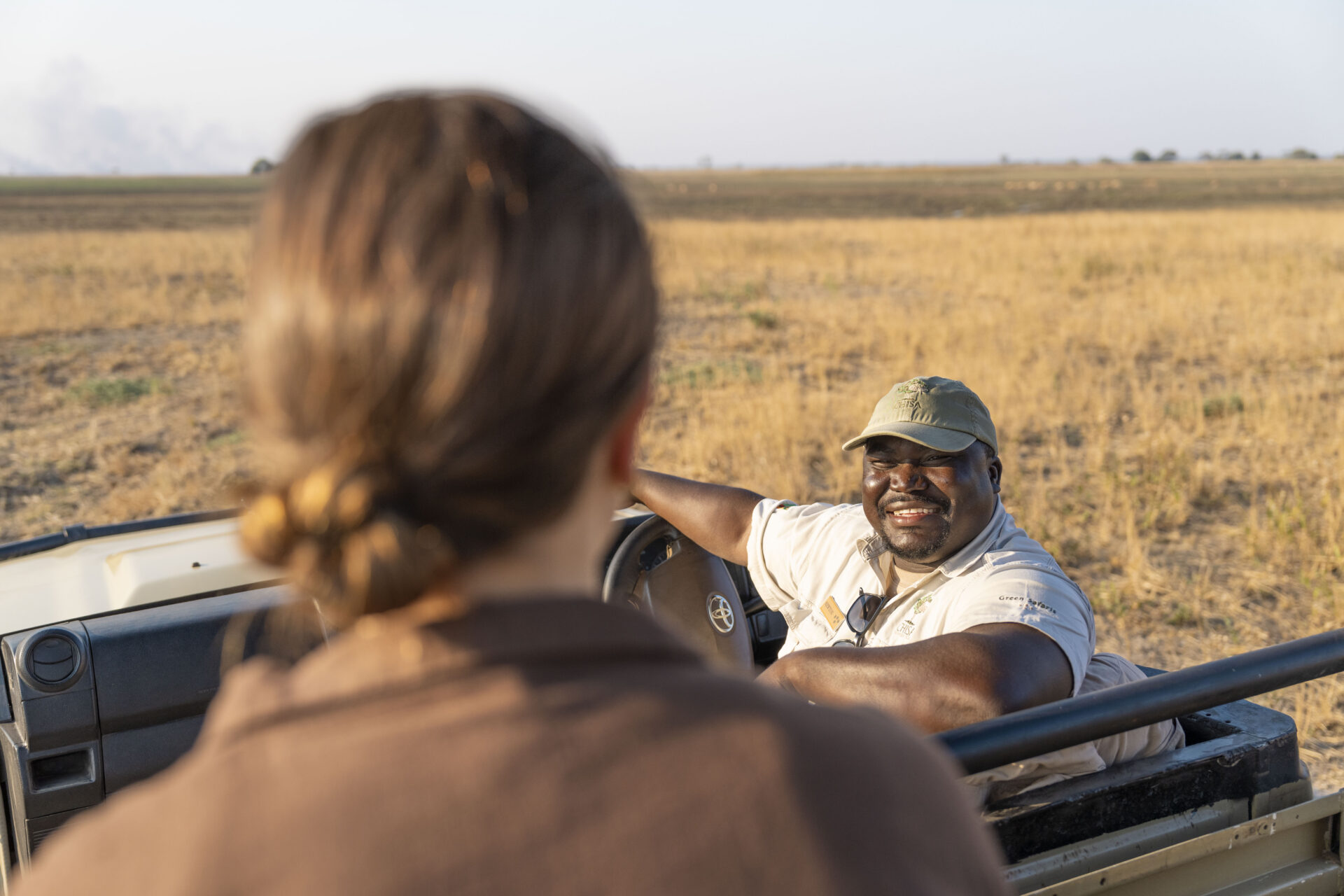
If you’re travelling with kids, managing a health condition, or simply prefer your wildlife encounters from a comfortable seat, the game drive is your format: it asks almost nothing of you physically and still delivers the sightings safari trips are built around. Honeymooners after golden-hour photography, first-time visitors who want the broadest possible introduction to African wildlife, and anyone travelling with very young or older family members will generally find more of what they came for from a vehicle.
If you’re an active traveller who wants a genuinely different kind of immersion (the sort of experience you’ll still be describing at dinner parties a decade later), a walking safari belongs on your itinerary. It particularly rewards returning safari-goers who’ve already ticked off the big sightings from a vehicle and are craving something slower and more personal, as well as birders, photographers interested in landscape and detail rather than just wildlife portraits, and anyone who genuinely wants to learn rather than just observe.
Honestly, though, most of our guests don’t choose. They do both. An early-morning walk followed by an afternoon drive is one of the most satisfying rhythms in African travel: the intimacy of the bush on foot, then the reach of a vehicle once the light gets long and the animals get moving.
Why Zambia Lets You Experience Both
This is where Zambia earns its reputation as the continent’s best-kept safari secret. In South Luangwa, you can walk in the footsteps of the safari’s founding guides in the morning and glide silently past a waterhole on an electric game drive vehicle by evening, guided by professionals like Jacob Shawa, named one of the world’s top eight professional guides at the 2017 Wanderlust World Guide Awards. That standard runs through our whole guiding team: Newtown Mulenga and Henry Miti were named Best Tour Guide by the Zambia Tourism Excellence Awards in 2024 and 2025 respectively.
Further west, Chisa Busanga Camp in the Busanga Plains and Ila Safari Lodge on the Kafue River bring Silent Safaris to two distinct areas of Kafue National Park. Down in the Lower Zambezi National Park, Sausage Tree Camp and Potato Bush Camp complete the picture, pairing walks along the river’s floodplains with drives beneath the escarpment, where elephants wade between islands and the Zambezi itself becomes part of the experience. Every stay also supports our conservation partners on the ground, including Game Rangers International, Panthera Zambia, and Conservation South Luangwa, so the choice between walking and driving comes with the quiet reassurance that either way, your visit is giving something back.
Eligible bookings of four nights or more include complimentary internal flights and transfers under our Wings & Wheels offer, subject to the applicable rates and conditions. That’s one less logistical headache standing between you and deciding, at your own pace, which way you’d rather meet the bush. You can browse the full range of safari itineraries here, and our growing media coverage is a good sign of just how far this way of travelling has already spread.
Final Thoughts
There’s no wrong choice here, only the one that suits the traveller you actually are rather than the one you feel you ought to be. Walk if you want the bush to get under your skin. Drive if you want to cover ground and chase the moment. Or, our honest recommendation, do both in the one place built for exactly that, and let Zambia make the case for itself.
Thinking about combining a walking safari with a game drive on your next trip? Get in touch, and we’ll help you build the itinerary.