

Ten Years, Ten Thousand Trees: Green Safaris Commits to a Decade of Planting
Green Safaris | May 15, 2026
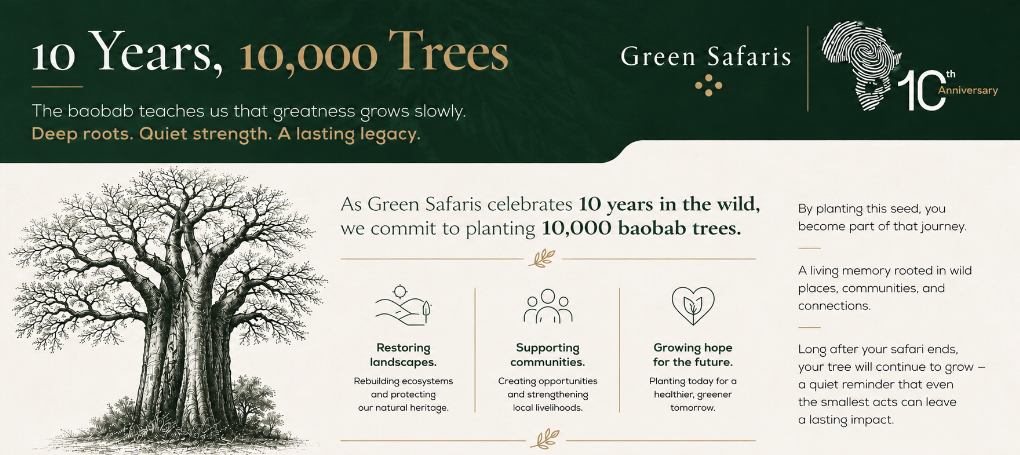
To mark ten years of operating in some of Africa’s most extraordinary wilderness, Green Safaris is making a long-term commitment to the landscapes that made it possible.
There is something quietly radical about planting a tree. It is an act of faith in the future, a decision that says: this place will still matter in twenty, fifty, a hundred years, and we intend to be part of the reason why.
As Green Safaris marks its tenth anniversary, that is exactly the commitment the company is making. Over the next year, Green Safaris and the Green Safaris Conservation Foundation will plant 10,000 trees across Zambia and Malawi, restoring native woodland in the regions the company calls home.
Why the baobab
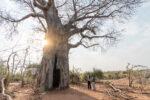
The baobab is one of Africa’s most iconic and most ecologically significant trees. Known across the continent as the tree of life, a single baobab can live for thousands of years, provide food and shelter for dozens of species, and store hundreds of litres of water in its trunk through the dry season. Across Zambia and Malawi, baobabs are native to the low-lying regions where several of Green Safaris’ properties are located, making them a natural and ecologically sound choice for a long-term planting programme.
All trees planted under this initiative will be indigenous species selected for the specific ecosystems of each planting site across both countries. The Green Safaris Conservation Foundation will oversee the planting, monitoring, and long-term care of all sites.
How to plant your own baobab
Want to grow one at home? The baobab is more forgiving than you might think, as long as you give it warmth, good drainage, and a little patience. Here is how to get started.
What you will need
A baobab seed, a pot with a drainage hole at the bottom, sandy soil, ordinary garden soil, compost, and water.
Step by step
1. Start by inspecting your seed. Make sure insects have not drilled into it before you begin.
2. Boil a pot of water, then take it off the heat and place your seed in the water as it cools.
3. Leave the seed to soak in that same water for two days. You can leave it in the pot or transfer it to a small bowl.
4. While the seed soaks, prepare your soil mix: 40 to 50% sandy soil, 40% ordinary garden soil, and 20% compost. Mix thoroughly and fill your pot, making sure the drainage hole at the bottom is clear.
5. After two days, drain the water and plant your seed in the soil mix, pressing it down to at least 3cm below the surface.
6. Place the pot in a warm, sunny spot and keep the soil carefully moist. The sandy mix drains quickly by design to prevent the roots from sitting in water.
7. Your seed should germinate in around four weeks. Once it sprouts, continue to expose it gradually to direct sun and keep the soil moist.
8. As the seedling grows, you can move it to a larger pot or introduce it to your garden.
| A note on patience: Baobabs are slow growers in their early years. Do not be discouraged. What you are planting will outlast almost everything else you will ever grow. |
| Taking seeds home? Please declare all plant material at immigration on arrival in your home country, and check that importing seeds or seedlings is permitted in your region before you travel. Regulations vary, and some countries restrict or prohibit the import of plant material to protect local ecosystems. When in doubt, leave it to the professionals and support the GSCF planting programme instead. |
A living legacy
Ten years ago, Green Safaris arrived in Zambia with a conviction: that it was possible to operate in wild places without diminishing them. The 10,000 trees commitment is the clearest expression yet of what that looks like over the long term. Not a gesture, but a programme. Not a promise, but a plan.
More details on the planting sites across Zambia and Malawi, and how to get involved through the Green Safaris Conservation Foundation, will be shared as the programme launches.