Sleeping Above the Busanga: Why Chisa Busanga Camp’s Nests Are Unlike Anything Else in Africa
Green Safaris | July 17, 2026
The Busanga Plains, Zambia’s Wild North
The Busanga Plains: Zambia’s Wild North
There is a particular kind of hush that only exists at first light on the Busanga Plains. It arrives before the hippos start grumbling, before the grass begins to steam, before a thousand red lechwe lift their heads in one great, synchronised swivel. Most people never hear it. At Chisa Busanga Camp, you sleep inside it, several metres up, tucked into a woven cocoon of timber and thatch that sways, ever so gently, in the breeze.
Let’s be clear: this is not the treehouse of your childhood. There is no rope ladder to wobble up, no sibling dispute over who keeps first watch, no risk of splinters delivered via bare foot at 2 am. This is a suite. A proper, linen-and-lantern suite, just built forty feet closer to the stars than anywhere else you’ve ever slept.
Below, the Busanga rolls out gold and green to a horizon that seems to bend with the curve of the earth, a sea of mist by dawn and a sea of moving herds by mid-morning. Above, nothing but sky, weaver birds, and the occasional hornbill eyeing up the newest arrivals in the canopy with mild professional curiosity. Welcome to Chisa Busanga Camp, where “room with a view” has been quietly, brilliantly reinvented from the inside of a nest.
What Makes Chisa Busanga Camp Different?
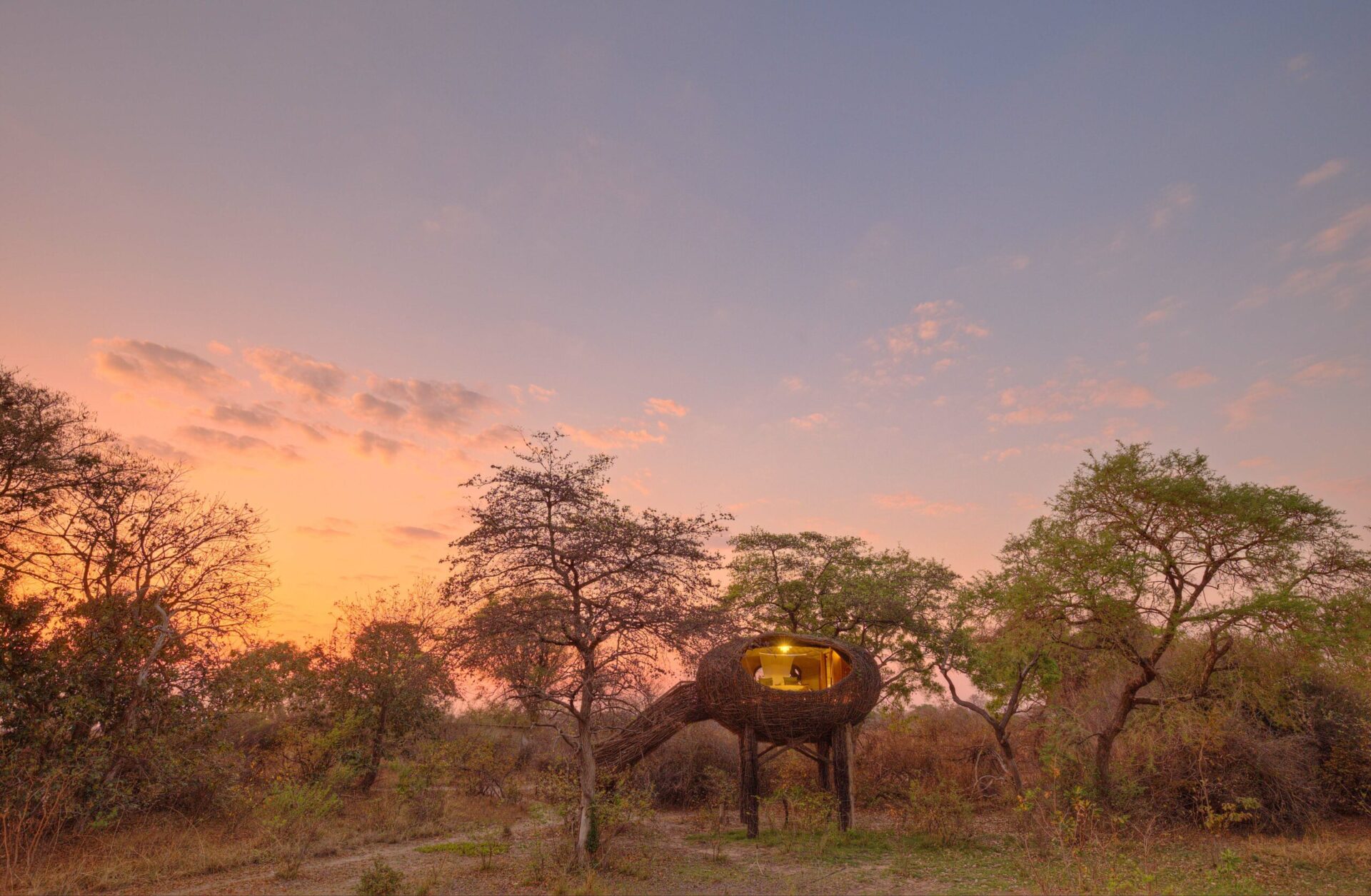
Chisa Busanga Camp is different from almost every other safari lodge in Zambia for one gloriously simple reason: nobody else asks you to sleep like a bird. Every suite here, known, fittingly, as a “nest”, is raised into the tree canopy on the edge of the Busanga Plains, one of the remotest and least-visited corners of Kafue National Park. Where other luxury camps give you a view of the bush, Chisa gives you a perch inside it.
The difference is also one of scale and solitude. Kafue is Zambia’s largest national park, roughly the size of Wales, and considerably better stocked with lions. The Busanga sector, tucked away in its far north, sees only a fraction of the vehicles found elsewhere on the safari circuit. Pair that kind of privacy with architecture borrowed directly from a weaver bird’s nest, and you land on a simple truth: there is nowhere quite like this, anywhere on the continent.
Curious what it actually feels like up there? Keep reading, or jump straight to planning your own stay at Chisa Busanga Camp.
The Nests, Architecture Inspired by a Weaver Bird
Weaver birds are, pound for pound, some of the most industrious residents of the Busanga. Small, quick, faintly self-important, and utterly obsessed with craftsmanship. Watch one for long enough, and you’ll see a bird build, unpick, rebuild and fuss over its nest until it meets some private, exacting standard of perfection, all before most of us have had breakfast. It seemed only fair that Chisa’s suites should borrow their name, and a little of that perfectionism, from the very architect who inspired them.
“I sleep in the trees, but I am not a bird. My home was inspired by one, a small, industrious weaver. I sit above a sea of mist and moving herds in Zambia’s greatest park. My name, in Nyanja, tells you exactly where to rest your head. What am I?” is a riddle that tells a tale as old as time. Not one too hard to solve and one you’d easily solve usually somewhere between the plunge pool and the first cup of coffee. The answer is the camp itself, Chisa, meaning “bird’s nest” in Nyanja, and just about the most literal name any lodge in Africa has ever earned.
Each nest is woven, there’s really no better word, from timber, canvas and thatch, raised on stilts and reached by a private walkway that feels part treehouse, part hideaway, part fairy tale. Inside, the design stays deliberately unfussy: a generous bed angled toward the plains, mesh walls that let every grunt, call and wingbeat drift in unfiltered, and a private deck built for doing absolutely nothing except watching the light change. Comfort hasn’t been sacrificed for concept; the linen is soft, the hot water is real, and select nests come with their own plunge pool, but the true star of the room will always be the view unrolling beyond the mesh.
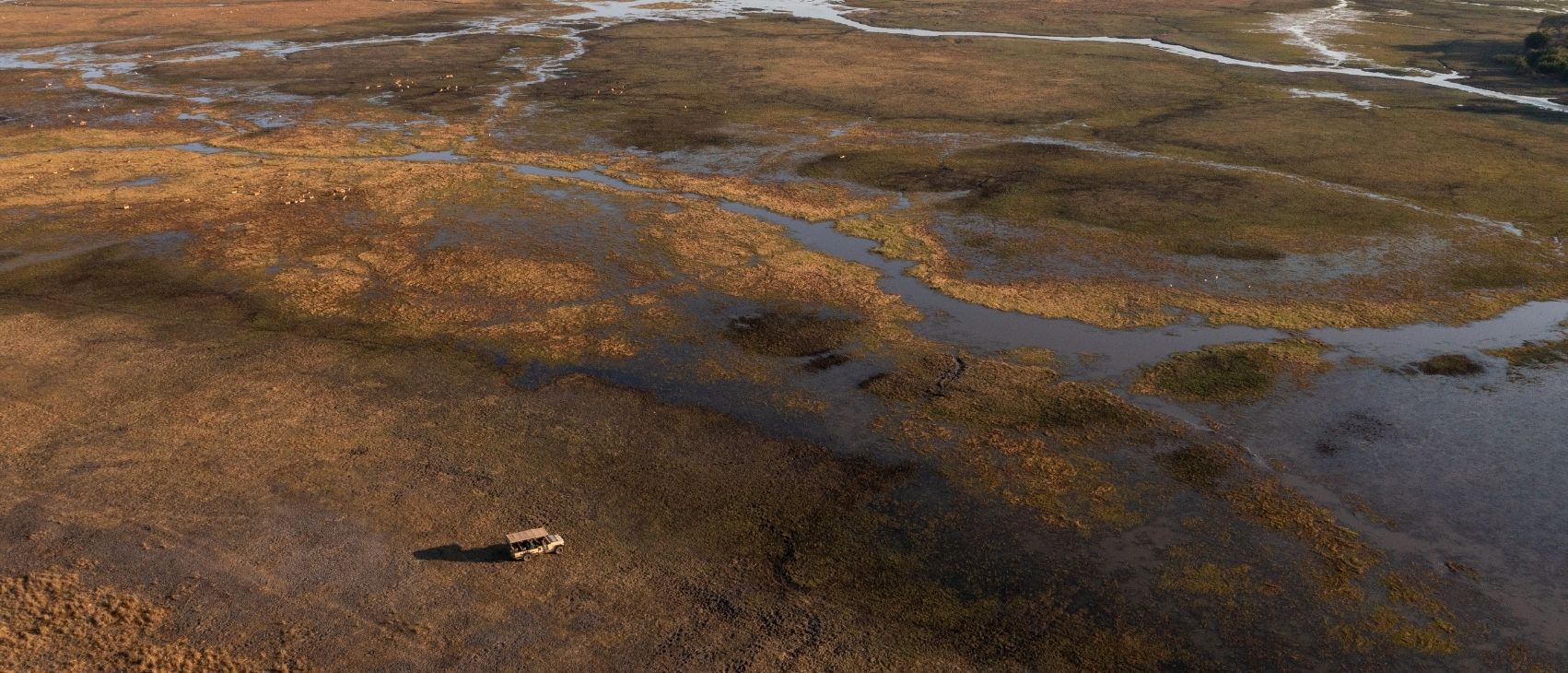
The Busanga Plains, Zambia’s Wild North
So, what exactly are the Busanga Plains? Picture a floodplain roughly the size of a small country, tucked into the far northern reaches of Kafue National Park, Zambia’s oldest and largest protected wilderness. For much of the year, it lies underwater, fed by seasonal rains and the slow retreat of the Lufupa River system. As the floods recede between June and October, they leave behind a vast, treeless grassland that turns into one of the great wildlife theatres of southern Africa, nature’s own stage revealed.
Red and black lechwe move across the plains in herds thousands strong, drawing the attention of the Busanga’s resident lion prides, some of which have developed an unusual, faintly alarming taste for hunting through open water. Cheetahs prefer the drier margins. Wattled cranes, saddle-billed storks and a long roll call of waterbirds treat the floodplain as a permanent address. Because the Busanga sits at the end of a long, sandy, mildly humbling drive from the rest of Kafue, it has stayed wonderfully uncrowded; sightings here tend to be shared with a handful of vehicles, not a dozen.
This is wild country in the truest sense: unfenced, largely unlit beyond camp, and run entirely on rhythms that have shaped it for millennia, with or without an audience. Sleeping above it, rather than simply passing through, changes the relationship completely. You stop watching the Busanga from a distance and start belonging, for a few nights at least, to its nightly soundtrack.
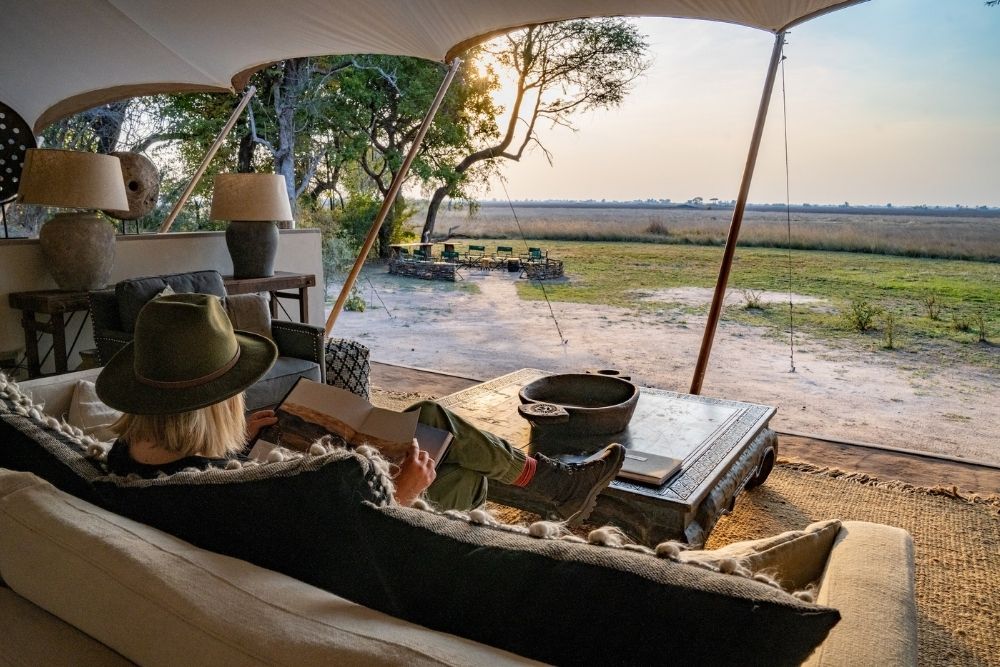
Life at Camp
Days at Chisa Busanga move at the pace the plains set, which is to say: unhurried, but never idle. Game drives head out early, chasing the soft light and the lion prides before the heat settles in. Guided e-bike outings across the Busanga’s fringes open up a slower, quieter side of the reserve that most travellers never see at all. Guiding here leans on knowledge passed down rather than read from a manual, trackers who grew up in these valleys, turning a lion sighting into a proper story and a termite mound into an unexpectedly gripping lecture.
That guiding ethos sits at the heart of everything Green Safaris does. Every stay at Chisa Busanga directly supports conservation and community programmes across the Kafue ecosystem, anti-poaching patrols, local employment, training, and education. Choosing to sleep in a nest, in other words, is also choosing to invest in the very plains that make the view worth waking up for.
Ready to trade your usual view for one shared with weaver birds? Start planning your nights above the Busanga at Chisa Busanga Camp.
When to Visit
The Busanga Plains are, by nature, a seasonal proposition and rather proud of it. The floodplain only becomes accessible once the waters have receded enough for vehicles to cross, which typically opens the camp’s doors from around June through to late October. Early season, June and July, bring lush green grass, softer light and particularly prolific birdlife. By August and September, the plains have dried further, concentrating wildlife around the last remaining channels and lagoons and delivering some of the year’s most reliable predator sightings. October turns up the heat and the drama, with the very last herds gathering before the rains return and the Busanga slips back beneath the water, a yearly reminder that this landscape, and the camp above it, run on the plain’s own terms. Not ours.
Sleep in the Trees
There are safari camps that offer a beautiful view, and then there is Chisa Busanga, which quietly asks you to reconsider what a bedroom is even for. To wake up here is to wake inside the landscape rather than beside it, mist below, herds moving through it, and a small woven world holding you several metres above the wildest corner of Kafue.
It’s not just our guests who think so: Chisa Busanga’s growing shelf of industry awards sits alongside a steady stream of five-star Tripadvisor reviews from travellers who’ve made the trip themselves. If the Busanga has been calling you from a distance, consider this its invitation up close.
Book your stay at Chisa Busanga Camp and discover what it means to sleep like a weaver bird, watch like a guide, and leave having given something back to the plains that hosted you.